
A Minute from the rector
As we begin a new academic year, I am grateful for the many ways God continues to work through the EuNC community.
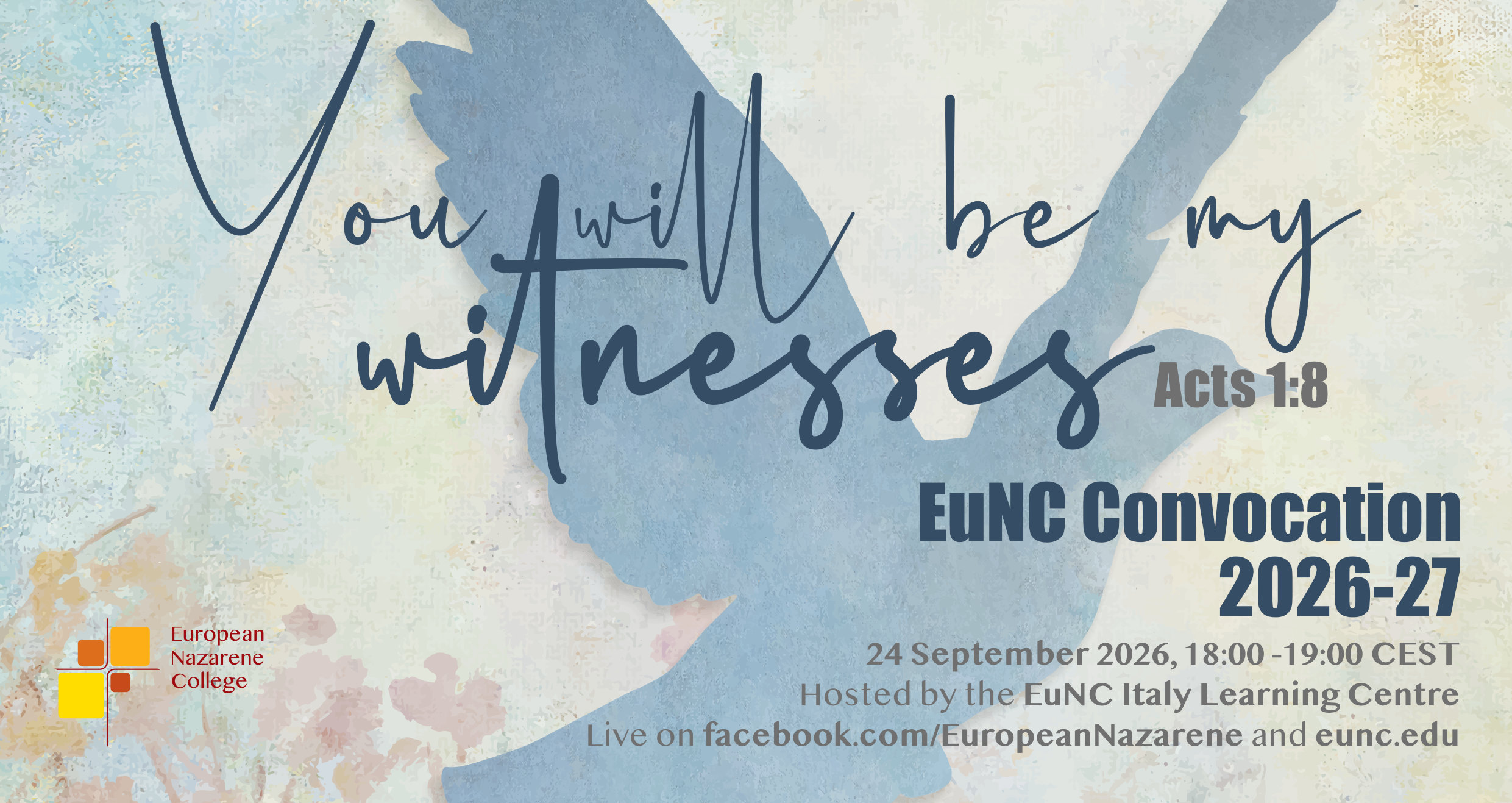
Last year, our theme invited us to Grow in Truth. This year, we are called to Grow in Witness (Acts 1:8). These belong together: the truth of Christ forms us, and the Holy Spirit empowers us to live and share that truth faithfully.
Across EuNC’s many countries, languages, and contexts, women and men are preparing to serve the church and participate in God’s mission. We warmly invite you to join our online Convocation and pray with the EuNC community as we open the new academic year and dedicate it to God.
Thank you for your continued prayers and support. Your partnership helps our students prepare for the ministry to which God has called them.
Wherever you are, may the Lord bless you and keep you, guide you in his truth, and strengthen your witness.
Grace and peace,
Mária Gusztinné Tulipán
Rector, European Nazarene College
European Nazarene College joined 350 participants "At the Table". The 2026 Eurasia Region Nazarene Youth Conference took place in Madrid from 6 to 10 August. Rev. Matteo Ricciardi, EuNC Academic Dean, represented the College at the event that brought together participants across the Eurasia Region around a vision of Christ’s table as a place where every person matters.
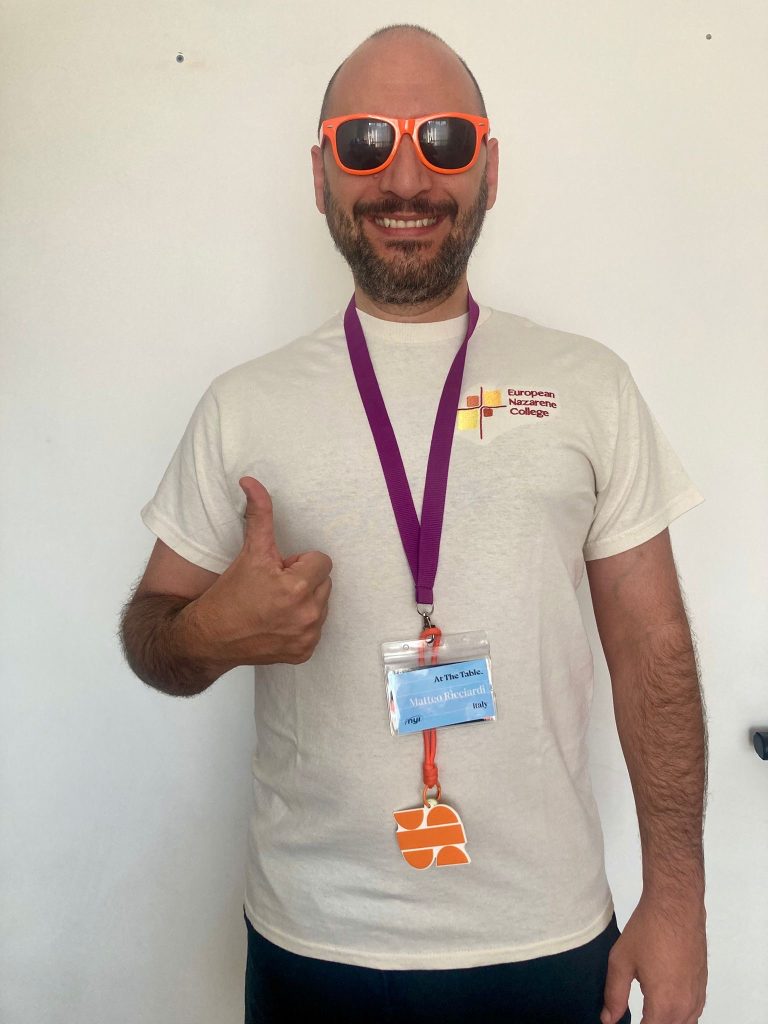
Rev. Dr. Ricciardi delivered two Table Talks within the event’s movement from invitation to transformation. “Called to the Table: Discerning Your Vocation” invited participants to consider who they are becoming in response to God’s grace, whom they are called to walk with, and to whom they are sent. Drawing on 2 Timothy 3:16–17 and 1 Peter 4:10–11, the workshop connected biblical reflection and practices of grace with concrete next steps. “Making Room at the Table: Engaging with Your Neighbourhood” moved from discernment to practice, helping participants map local needs, resources, and initiatives and explore listening, collaboration, social projects, and partnerships.
The Academic Dean also had the opportunity to connect with some faculty members from different learning centres and to strengthen ties with the departments of Mission Mobilisation and Media and Communications, among others. EuNC was also visibly represented by its students and faculty, demonstrating its connection with the life of the Eurasia Region, reaffirming the College’s commitment to vocation, discipleship, mission, and community engagement, and opening new avenues for collaboration.
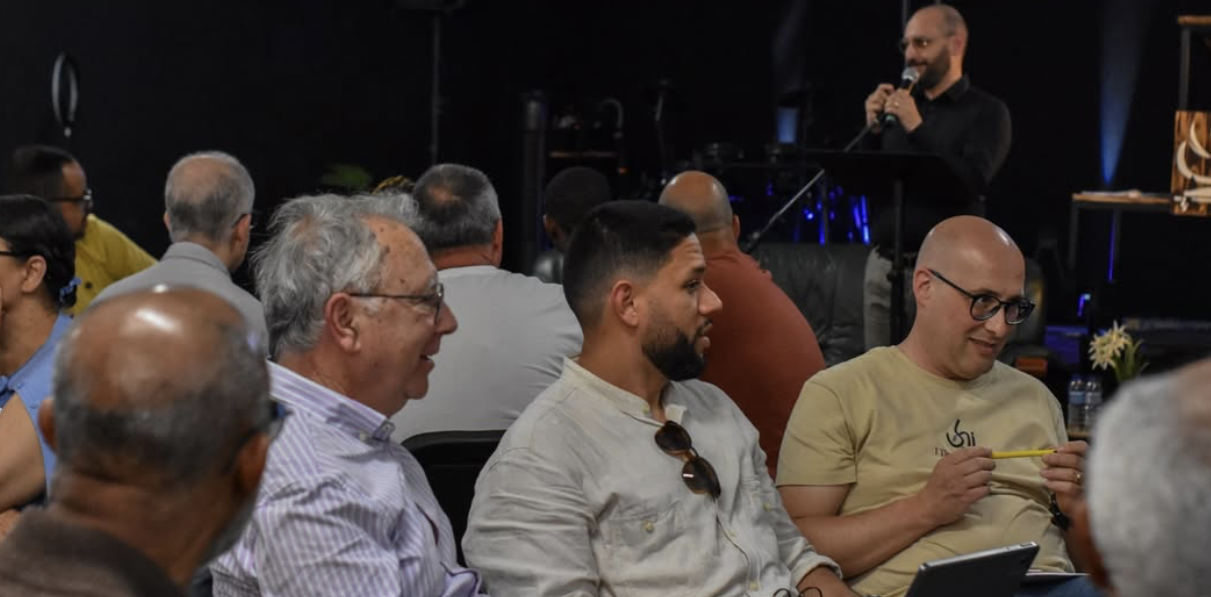
On 23 May 2026, the EuNC Portugal Learning Centre hosted a Ministerial Training Day at Queluz Church of the Nazarene on the theme “Christocentric Leadership: Why Theology Should Shape Our Leadership”. The event, organised in collaboration with the District Board of Ministerial Studies, brought together pastors and church leaders for a day of theological reflection, pastoral dialogue, and ministerial formation.
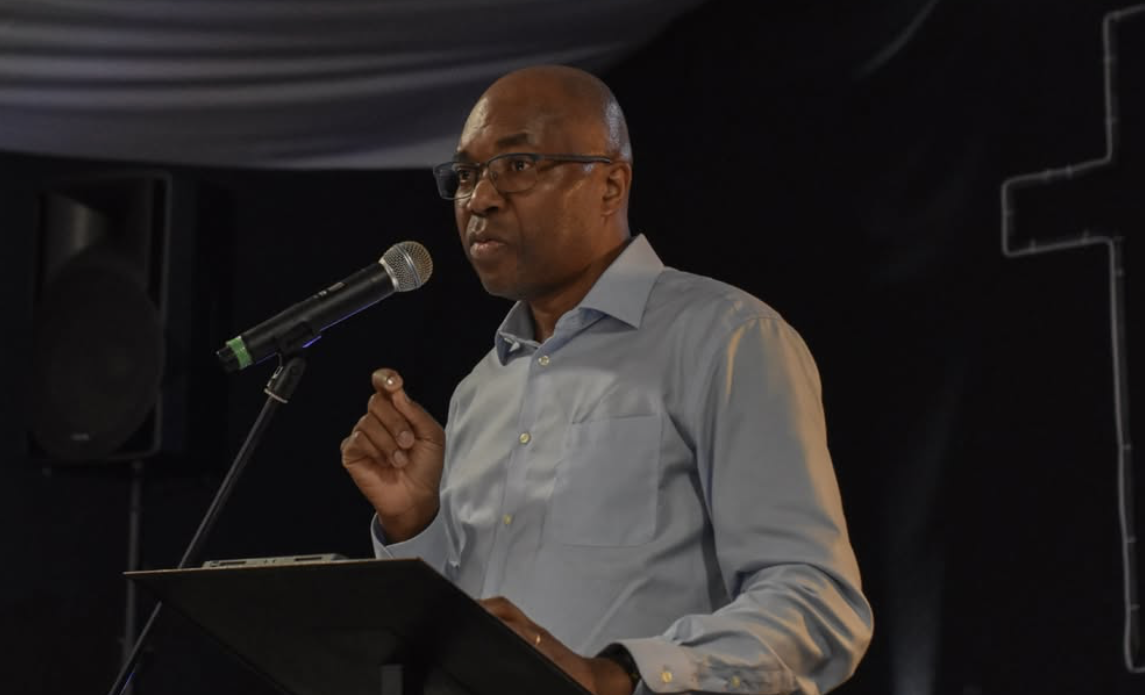
The seminar was led by Rev. Dr Fili Chambo, General Superintendent in the Church of the Nazarene, and drew on biblical theology, pastoral experience, and contemporary challenges facing Christian leadership to explore how leadership is shaped by Christ's identity and the call to holy living.
Particular attention was given to the theological foundation of Christocentric leadership through the study of 1 John and 1 Peter. The session “Jesus, the Messiah, the Son of God: The Centre of Christocentric Leadership”, reflected on the relationship between Christology and leadership, emphasising that leadership separated from theology risks becoming mere pragmatism. Focusing on 1 John 1–2, Dr Chambo explored the importance of confessing Jesus as fully God and fully human, warning against forms of contextualisation that weaken the church’s theological centre. The session also addressed themes of communal leadership, walking in the light, and the pastoral implications of grace, restoration, and cruciform authority.
The next session, “Identity Before Function: ‘Be Holy’”, focused on 1 Peter 1:13–16 and examined holiness as the foundation of Christian leadership. Participants reflected on the need to resist cultural conformity, cultivate the leader's inner life, and understand sanctification as a lived, communal reality rather than a merely private ideal. Drawing on pastoral examples from diverse cultural contexts, the discussion highlighted how Christian leaders are called to embody integrity, discernment, and faithfulness in increasingly complex cultural settings.
Throughout the day, teaching sessions were interspersed with small-group discussions, enabling participants to engage with the theological and pastoral implications of the themes presented. The seminar formed part of the district’s broader commitment to continuous ministerial development and to strengthening leadership that remains rooted in Scripture, shaped by holiness, and attentive to the realities of contemporary ministry.
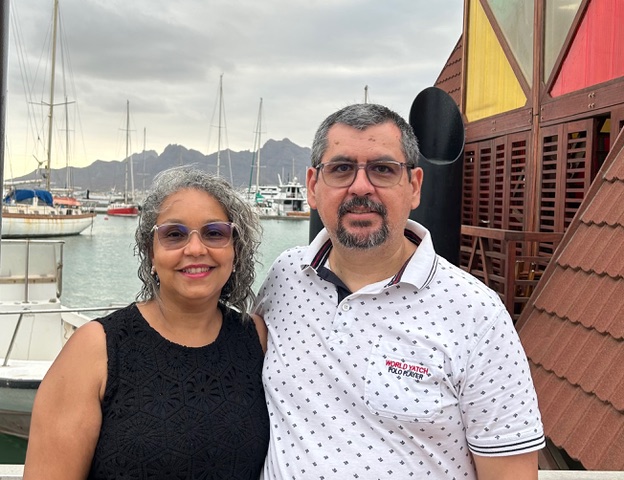
Rev. Dr. Fernando and Liliana Almeida have been serving our college for more than ten years. While they recently stepped down from their General Administration roles as Director of Curriculum Development and Quality Assurance (Fernando) and EuNC Cares Coordinator (Liliana), they continue to serve as Coordinator and Administrator of the EuNC Spain and France Learning Centres.
As they look to the future, they remain passionate about developing leaders for ministry across Europe. “We hope and envision that EuNC will remain relevant as a college, training the leaders the church needs to meet the challenges of society, and thus contribute to the growth of the Kingdom of God in Eurasia.”
The Almeidas’ journey with EuNC began in the late 90s, when Fernando taught a course in Christian Ethics as a guest lecturer. In 1998, Liliana was involved with the extension centre in Portugal. It wasn’t until 16 years later that EuNC came unto their radar again. “We were both surprised by an invitation to return as missionaries to the Eurasia Region and to serve at EuNC,” they share. After leading the Nazarene seminary in Quito, Ecuador, for nearly a decade, they realised that God was guiding them in a new direction.
Academic and Relational Quality
Over the following ten years, they helped shape EuNC in various roles. Fernando’s involvement as Director of Curriculum Development and Quality Assurance was crucial as the college went through two accreditation processes, as well as the validation of its curriculum for ordination in the Church of the Nazarene. “These processes required a great deal of work, but their outcomes enabled us to continue fulfilling EuNC’s mission across the Eurasia Region,” Fernando reflects. These external reviews helped EuNC remain relevant to the needs of the church and affirmed the quality of the college’s curriculum, structures and educational provision. This affirmation was particularly significant for EuNC as a decentralised, multilingual college without a traditional residential campus. “Fernando’s thoughtful and disciplined leadership has made a lasting contribution to EuNC. His work in curriculum development, quality assurance, accreditation, and validation helped demonstrate that a decentralised, multilingual college can combine academic quality with faithful service to the church across many different contexts,” says Mária Gusztinné Tulipán, Rector.
While Fernando’s role focused on the academic ministry of EuNC, Liliana was involved in the area of internal relations. As the first EuNC Cares Coordinator, she encouraged colleagues and constituents in need, pray with those mourning and rejoice with those who were celebrating milestones in their personal, ministerial or academic lives. “Receiving a card from Liliana was always a special moment. When your life situation is acknowledged and met with care, it makes you more aware of the presence of God. Liliana’s heart came through in this important ministry,” shares Dennis Lieske, EuNC Coordinator of Constituent Relations and one of the colleagues Liliana blessed during her time in that role.
A New Appreciation
The Almeidas have not just impacted EuNC’s General Administration and overall college development, but the nature and character of EuNC have also shaped them as a couple. Since 2018, they have served the EuNC Spain Learning Centre as Coordinator (Fernando) and Administrator (Liliana). They highly treasure the strong connection between students and faculty, which has also contributed to a steady development of the Learning Centre. They highlight, “It has been such a joy to see this Learning Centre grow, develop and thrive in a fairly small district of 6 organised churches. From a handful of students when we started, we now have about 40 students.”
It is not just the growth and development of the college that Fernando and Liliana value. They have also found a new appreciation for the multinational character of EuNC. “Being part of the EuNC community has expanded our perspective to lead and work in multicultural community, where values, language, cultures are different. Although as missionaries we were trained for, and experienced multiculturalism in South America, the level of variety of cultures and languages within EuNC are exponentially higher. It required us to learn, adjust and grow as missionaries in order to raise up to the challenge ahead.”Events such as Faculty Assembly, leadership retreats or the establishment of a covenantal relationship with the Salvation Army in Spain have played a significant role in strengthening the various networks and relations EuNC is connected with.
“We Do It Differently”
It is not the only positive change the Almeidas have seen since they started at the college. Due to the decentralised nature of EuNC, continuing to develop digitally and expand its virtual provision is crucial. For EuNC, distance learning is not a challenge to overcome but, as Fernando and Liliana point out, “The very thing we do. EuNC is very different from other colleges. We teach students and prepare them to serve in the ministry of the church, but we do it differently.” While faculty embrace new teaching methodologies, students change the way they think about studying. “Students need to relearn learning, as at EuNC we value participative learning and student reflection. Teachers are more “the guides on the side” than the “expert in the room” so that guidance is provided but students need to get to their answers based on their reflection.”
In 2025, Fernando and Liliana transitioned from their roles in EuNC’s General Administration to a ministry where their work focuses on theological education on the Western Mediterranean Field. Since then, they have been not only involved in Spain but also as Coordinator and Administrator for the EuNC France Learning Centre, a ministry they have undertaken with much enthusiasm: “ It's exciting to oversee this learning community of about 70 students from both countries. We just started in France, but we are already seeing engagement, and development in several areas. We absolutely see the interest for growing closer to God and developing skills to serve the church, and this is drawing in old and new students to engage.”
A Vision for the Future
Even though Fernando and Liliana no longer serve in college-wide roles, their work at EuNC remains significant through their roles for the two Learning Centres. After more than a decade of shaping the character, quality, and development of the College, they look to EuNC’s future with confidence and enthusiasm, particularly to its continuing role in preparing leaders for ministry. Fernando says, “We hope and envision that EuNC will remain relevant as a college, training the leaders the church needs to meet the challenges of society, and thus make an impact in the growth of the Kingdom of God in Eurasia.”